
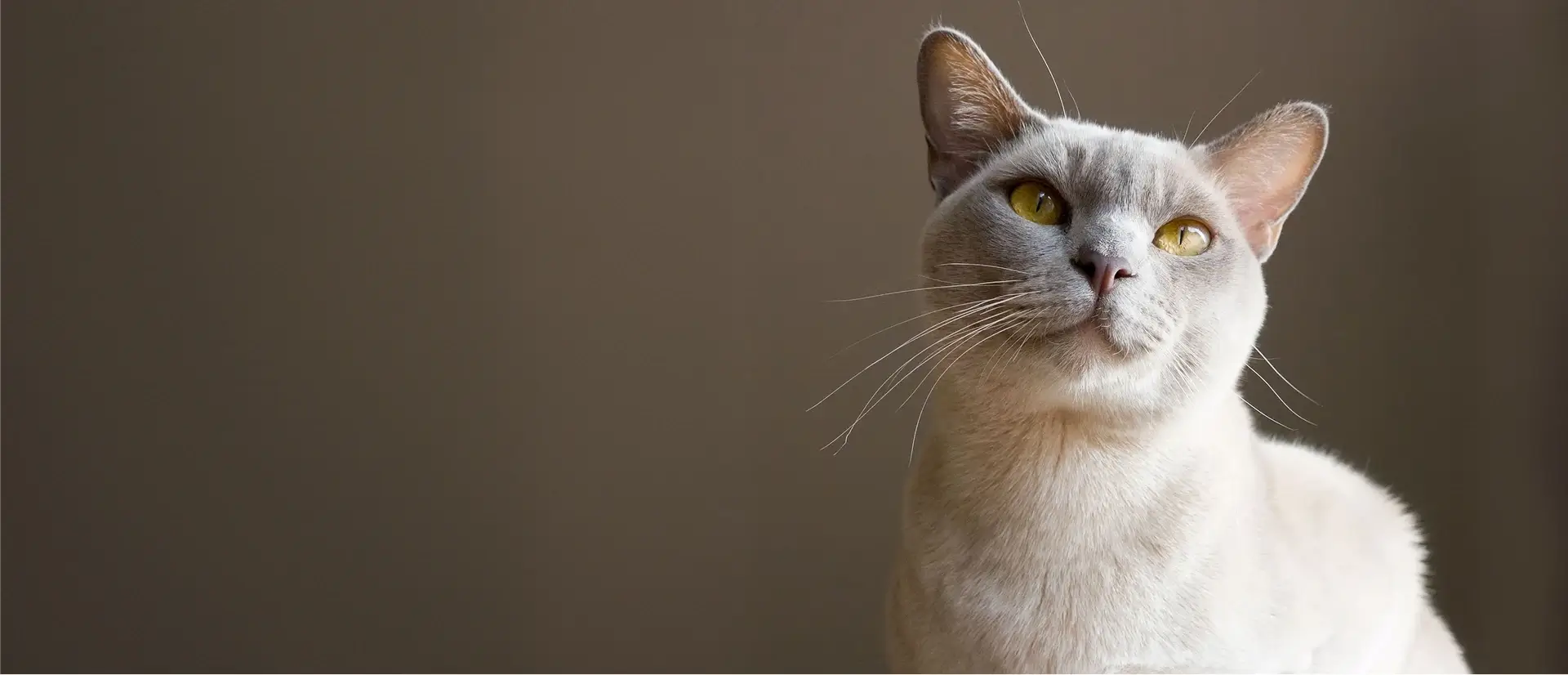
Burmese cat insurance at a glance
Burmese cats carry a significantly higher risk of diabetes than most other breeds — and the ongoing cost of insulin, monitoring, and specialist consultations can add up fast. Learn more about this beloved breed, including their health considerations, care requirements and how RSPCA Pet Insurance can help with eligible accidents, illnesses and ongoing treatment.
Quick facts


About Burmese cats
Compact, muscular, and famously dog-like in their attachment to people, the Burmese is unlike most cats. They generally seek out human company rather than tolerating it, and their emotional intelligence makes them exceptional companions for owners who want a truly engaged relationship with their pet. Originating from Southeast Asia, the modern Burmese breed was developed in the United States from a single brown cat imported from Burma in the 1930s.
Temperament
Temperament
Generally outgoing, warm, and highly people-oriented. Burmese cats often greet visitors like old friends and follow their owners throughout the house. They’re chatty without being too vocal, and being highly social, may suffer from separation anxiety if left alone for long periods.

Exercise needs
Exercise needs
Moderate to high. Burmese are active and playful well into adulthood. Like all cats, they need daily interactive play and mental stimulation to stay happy and well-adjusted. Puzzle feeders, wand toys, and games that mimic hunting behaviour are all excellent outlets for their energy.
Grooming
Grooming
Very low maintenance. Their short, close-lying, satin-like coat requires almost no brushing. A quick wipe-down with a damp cloth or chamois is usually all that’s needed to keep it glossy. This makes the Burmese one of the easiest breeds to groom.

Living with you
Living with you
Best suited to households where someone is home often. Burmese cats can become stressed or anxious and develop problematic behaviours if left alone for extended periods. Many Burmese owners keep two cats so they can keep each other company – but patience is key, as each cat is an individual and it can take a long time for cats to get used to sharing their home.
Common Burmese health conditions
Burmese cats are generally hardy but carry a handful of hereditary health conditions that pet parents should be aware of. Select a condition below to learn more.
A genetic condition causing episodic muscle weakness, seen more commonly in Australian and New Zealand Burmese lines than those in other countries.
Burmese cats have a significantly higher rate of type 2 diabetes than most other breeds. Weight management and diet are key preventive measures.
A neurological condition causing episodic facial pain and excessive pawing at the mouth. It’s seen almost exclusively in Burmese cats.
While not as strongly breed-associated as in Ragdolls or British Shorthairs, HCM does occur in Burmese and warrants regular cardiac monitoring.
Like most cats, Burmese are prone to periodontal disease. Their sociable, food-oriented nature can sometimes make dental care easier to introduce early.
A quick tip

Burmese cats in Australia have a notably elevated diabetes risk compared to other breeds. Keeping your Burmese at a healthy weight and feeding a high-protein, low-carbohydrate diet are the most effective preventive measures.
Why pet parents choose RSPCA Pet Insurance

Your premium helps support animals in need

Customise your cover to suit your Burmese and budget

Annual cover options up to $35,000

Zero excess option


Our customisable cover at a glance
| Cover | Your options | What it means |
|---|---|---|
| Annual cover limit | This is the maximum amount we’ll contribute towards your pet’s care per year. When choosing a cover limit, make sure it’s enough to cover the treatments your pet might need. | |
| Benefit percentage | This is the portion of your vet bill your insurer will cover for an approved claim. With us, you can choose the percentage that works best for you. For example, if you pick a benefit percentage of 80%, we’ll cover 80% of the bill and you’ll pay the remaining 20%. | |
| Annual excess | This is the amount you agree to pay towards your claims each year, before we step in to cover the rest. With us, you only pay one annual excess, not one for every claim, so it’s easier to focus on your pet’s care. | |
| Cover for vet consultations | This refers to your vet’s consultation fees. You can choose whether you’d like these fees to be covered, so you’re only paying for what matters to you and your pet. |
Please note that your cover won’t start straight away. Exclusion periods apply, and you’ll find the details on your Certificate of Insurance (COI). Cover becomes available once the relevant exclusion period has ended. For more information, please read our Product Disclosure Statement (PDS).
Protection with purpose
Did you know: every RSPCA Pet Insurance policy contributes to vital RSPCA animal welfare initiatives. Protect your Burmese and support animals in need across Australia.
Frequently asked questions
Premiums are based on your cat’s age, location, and chosen cover level rather than breed alone. That said, Burmese cats do carry a higher-than-average risk of diabetes and some neurological conditions, which may be reflected in their pet insurance premium. To see how much cover could cost with RSPCA Pet Insurance, click here.
Our policies cover illnesses including endocrine conditions like diabetes, subject to the terms and conditions in our PDS. Conditions that develop after your policy begins (and aren’t pre-existing) can be claimed for. Ongoing diabetes management, including insulin and monitoring, can be a significant recurring cost, making insurance very worthwhile for this breed.
Because Burmese cats are known for their social nature, some owners choose to have more than one cat. If you’re considering a second cat, RSPCA Pet Insurance offers a multi-pet discount, so it’s worth asking about this when you get a quote.
Yes! If you insure more than one pet with RSPCA Pet Insurance, you’ll enjoy a 10% discount on all subsequent pets, helping you keep all your pets protected without stretching your budget.
